From the podcast
Nobody is buying your features
After decades in business I had exactly two Google reviews. Both were one star. Neither had anything to do with the quality of our work.
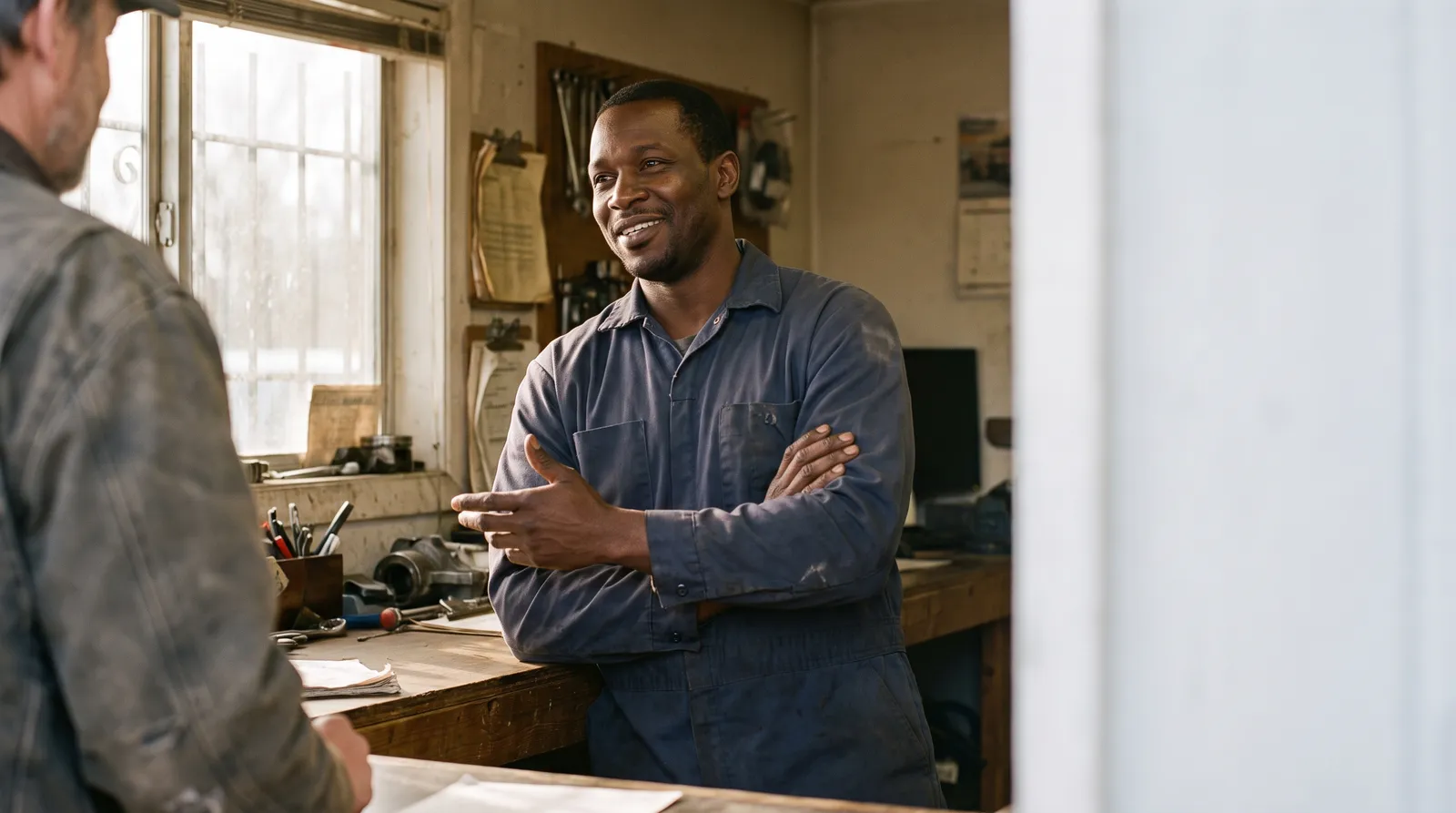
One of them was about how long an IRS refund took. That was never in our control, and no amount of care on our side would have changed it. The other was much the same shape. Two complaints about things outside our hands, sitting on a public page that was supposed to represent thousands of clients we had served well.
That was the whole public record. Everyone who had been happy simply went home.
I did not think reviews mattered
I will admit I was sceptical. My view was that our work spoke for itself and that people found us the way they always had, by being sent. Then the younger people on my team told me plainly that they will not walk into a restaurant without checking first. Not a big restaurant decision. Lunch.
If that is how someone chooses where to eat, it is certainly how they choose who handles their money. I had been letting two strangers write the firm's introduction.
What we actually built
The fix was not clever. It was a simple automated email sequence that runs after a client picks up their return. It thanks them, asks how it went, and gives them an easy path to leave a review or send someone our way. People who do not respond get a reminder. We run it in January, while the experience is fresh and before the season buries everyone.
That year we went from two reviews to roughly a hundred five-star reviews, and about fifty new clients told us, without being asked, that they had found us through them. Not a campaign. An email that already existed, sent on purpose instead of never.
People will refer you, but not uphill
Here is the part that surprised me least once I saw it. Most people are glad to refer you. They are not going to do it if there is any friction at all. If they have to find your website, work out where the review form lives, or remember your full business name three days later, it does not happen, and it is not because they were unhappy.
This is not a CPA thing. A doctor, an auto shop, a salon, same pattern. The goodwill is already there. The path to using it is what is missing.
Which brings me to the thing I wish somebody had told me earlier. The number one job of an entrepreneur is not to do the work. It is to sell the work. The doing is why clients stay. The selling is why there are clients.
When I tell a client I saved them twenty five thousand dollars, the number alone often does not move them. What moves them is picturing what it does.
People buy the change, not the figure
That number is the feature. What it changes is the reason anyone cares. It is the staff member they can finally hire. It is the equipment that stops being a maybe. It is a year where the tax bill is not the thing they brace for every spring.
Sell the outcome and the figure lands. Lead with the figure and you are asking somebody to do the translation themselves, at the end of a long day, about a subject they find stressful. Most people will not.
None of this happens off the top of your head
The reason it worked was not inspiration. It was structure. One sequence, written once, running every year without anyone deciding to run it. The same is true of the referral ask, the follow-up and the reminder. Built once, run consistently.
That is the same logic I apply to the financial side of a business. The results come from things that happen on schedule whether or not you thought about them that week. If you would rather look at the money side of your business that way, your Charter team works with owners during the year rather than after it.
Where this goes next
- Tax SnapshotEight questions, two minutes, nothing stored.
- Strategy CircleWeekly teaching session to an agenda, plus the recorded library.
- Twenty minutes with usNo charge. Bring the Snapshot result if you have it.
This is general information, not advice on your own situation. Whether any of it applies to you depends on facts this article does not know.
Two minutes
Does this one apply to you?
The Snapshot asks how your business is set up and how you take money out of it, then tells you whether this is on your list and what else is.
- Named strategies for your situation
- A recommended starting point
- Nothing leaves your browser
Keep reading
Also on this situation
 Article
Unused knowledge is worthless
Money needs time the way concrete needs time to cure. Waiting for the right lump sum is the most expensive habit there is.
 Article
You cannot be too nice in business
It is rarely a bad quarter that drains a business. It is the owner who was too nice to hold a line.
 Article
Build the plane while you are flying it
The people who struggle with money are rarely the people who lack information.